

A successful bathroom renovation is not only about choosing attractive tiles, fixtures, and finishes. A bathroom needs to handle constant moisture, temperature changes, daily use, cleaning, and long-term wear without developing leaks, mould, damaged surfaces, or structural problems. For Vancouver homeowners, these considerations are particularly important when planning a modern bathroom that needs to remain comfortable and functional for years.
A well-planned Bathroom Renovation project should therefore begin with the fundamentals: waterproofing, drainage, ventilation, materials, layout, and construction quality. Once these elements are addressed, homeowners can focus on aesthetics and features that make the space more practical and visually appealing.
Why Waterproofing Should Come Before Bathroom Design
Water is one of the biggest long-term risks in any bathroom. Even a small failure in waterproofing can allow moisture to reach areas that are not designed to remain wet.
Over time, hidden moisture can contribute to:
- Damaged drywall
- Deteriorating subfloors
- Mould growth
- Swollen cabinetry
- Cracked finishes
- Loose tiles
- Unpleasant odours
- Expensive repairs
Waterproofing should therefore be treated as part of the bathroom’s structural protection rather than simply another finishing detail.
Shower walls, shower floors, corners, niches, transitions, and areas around plumbing penetrations all require careful attention. A visually impressive bathroom can still become a costly problem if moisture protection underneath the finished surfaces is inadequate.
How Does a Proper Bathroom Waterproofing System Work?
A bathroom waterproofing system is designed to prevent water from penetrating vulnerable areas and reaching the underlying structure.
The exact system can vary depending on the construction method and products being used, but the important principle is continuity. Waterproofing should not stop at one surface while leaving another vulnerable area exposed.
For example, a shower waterproofing strategy should consider the relationship between the walls, floor, corners, drains, fixtures, and penetrations. These areas must work together as part of a complete moisture-management system.
This is one reason homeowners should discuss waterproofing details before tile installation begins. Once finished surfaces are installed, hidden problems can become considerably more difficult and expensive to correct.
Why Ventilation Matters in a Vancouver Bathroom
Waterproofing protects the structure from water penetration, but ventilation helps control moisture in the air.
Everyday activities such as showering and bathing release humidity into the bathroom. Without adequate ventilation, condensation can accumulate on walls, ceilings, mirrors, windows, and other surfaces.
Poor moisture control can contribute to mould and surface deterioration, particularly in bathrooms that are used frequently.
A bathroom renovation is therefore an opportunity to evaluate the existing ventilation system. Homeowners should consider whether the exhaust fan is appropriately positioned, whether it provides adequate airflow for the space, and whether moisture is being effectively exhausted from the home.
A modern bathroom should be designed around both water management and humidity management.
How Bathroom Layout Affects Long-Term Function
A beautiful bathroom can still feel inconvenient if the layout does not work for everyday use.
Before selecting finishes, homeowners should consider how people move through the room. The position of the vanity, toilet, shower, bathtub, doors, storage, and towel areas can significantly affect usability.
A professional renovation plan may identify opportunities to improve:
- Walking clearance
- Shower access
- Door movement
- Storage capacity
- Vanity functionality
- Fixture placement
- Cleaning access
- Lighting positions
For smaller Vancouver homes and condos, layout efficiency becomes even more important. Moving one fixture or changing the configuration of a shower can sometimes create more usable space without increasing the bathroom’s overall footprint.
Choosing Materials for a Durable Bathroom
Bathroom materials need to withstand moisture and repeated daily use. Appearance matters, but durability should be considered alongside style.
Flooring, wall finishes, countertops, cabinetry, hardware, and fixtures should all be selected based on where and how they will be used.
For example, flooring should provide appropriate traction and be practical to maintain. Countertop materials should tolerate regular exposure to water and cleaning products. Cabinet finishes should be suitable for a humid environment.
Homeowners should also think about maintenance. A material that looks impressive but requires constant care may not be the best choice for a busy household.
The goal is to create a bathroom where aesthetics and practical performance support each other.
What Should Vancouver Homeowners Consider When Renovating an Older Bathroom?
Older bathrooms can contain outdated plumbing, inefficient layouts, deteriorated materials, insufficient ventilation, or previous renovation work that does not meet current expectations.
Before covering everything with new finishes, homeowners should assess what exists underneath.
A renovation may reveal issues such as:
- Water damage
- Aging plumbing connections
- Uneven floors
- Damaged subflooring
- Poor previous waterproofing
- Outdated electrical components
- Moisture-related deterioration
Identifying these conditions early helps homeowners make informed decisions about the scope of the project rather than discovering major problems after the new bathroom has already been partially completed.
Working With Renovation Contractors in Vancouver
Choosing experienced Renovation contractors Vancouver can make a significant difference when a bathroom project involves multiple trades and construction stages.
Bathroom remodelling often requires coordination between demolition, plumbing, electrical work, waterproofing, drywall, tile installation, cabinetry, flooring, ventilation, and finishing.
A contractor needs to understand how these stages interact. For example, waterproofing cannot simply be treated as an isolated task because it must work correctly with the shower structure, drain, tile system, and surrounding surfaces.
Homeowners should ask potential contractors how they approach moisture protection, substrate preparation, ventilation, material selection, and project coordination.
Why the Order of Construction Matters
A bathroom renovation Vancouver follows a sequence for a reason. Completing work in the wrong order can create unnecessary complications.
A typical project may involve:
- Planning and measurements
- Demolition
- Inspection of existing conditions
- Plumbing and electrical adjustments
- Structural or substrate repairs
- Waterproofing and moisture protection
- Wall and floor preparation
- Tile or other surface installation
- Cabinetry and fixtures
- Lighting, hardware, and finishing
- Final inspection and cleanup
The exact sequence depends on the project, but each stage should be coordinated with the next.
For example, installing finished surfaces before confirming the condition of the underlying substrate can create problems that are expensive to correct later.
How to Balance Modern Design With Practicality
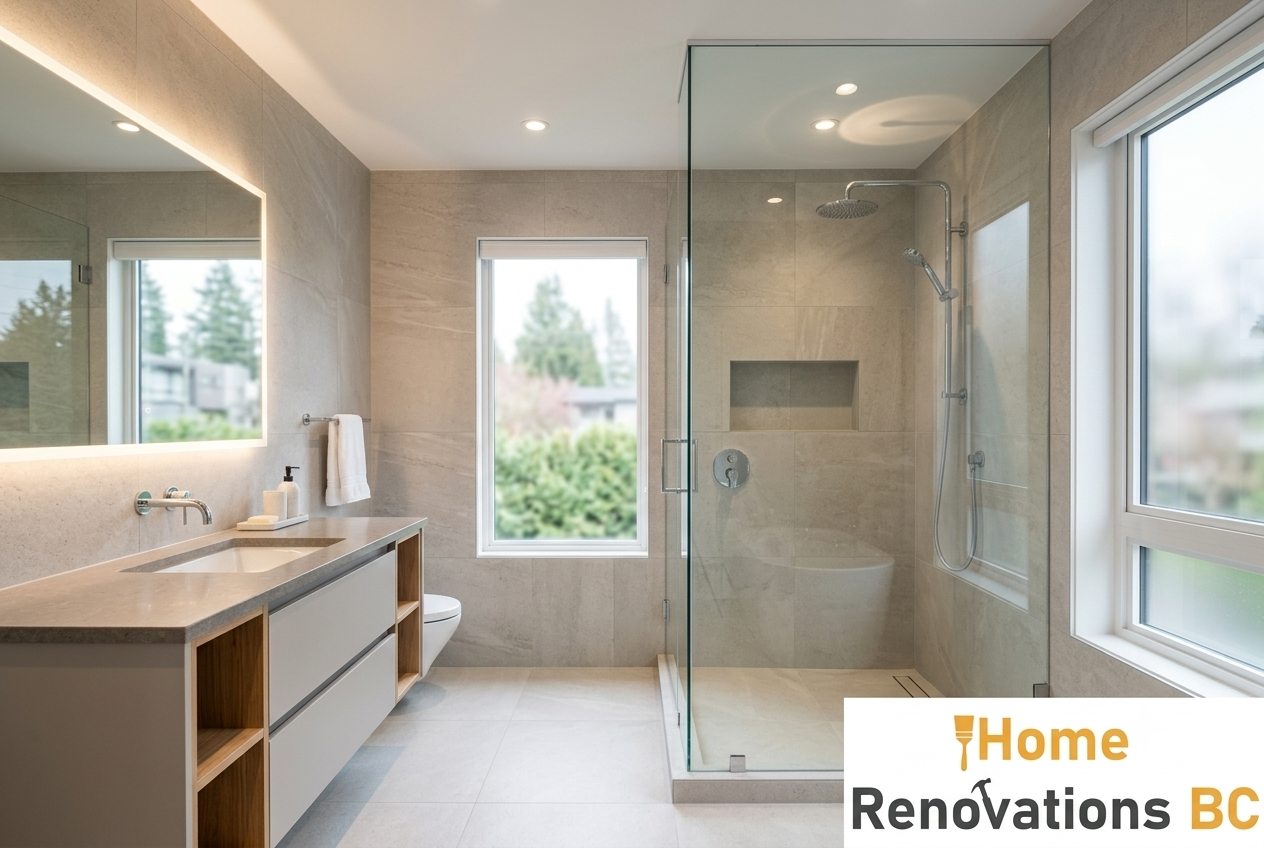
Modern bathroom design often emphasizes clean lines, minimal clutter, large-format surfaces, neutral finishes, and integrated storage. These design choices can create an attractive space, but functionality should remain the priority.
A modern bathroom should still provide enough storage for everyday items, convenient access to towels, adequate lighting, comfortable fixture placement, and surfaces that are easy to clean.
Homeowners can also consider features such as:
- Recessed shower niches
- Floating vanities
- Integrated storage
- Large mirrors
- Layered lighting
- Frameless or minimal shower enclosures
- Durable countertop surfaces
- Water-efficient fixtures
The best design decisions are those that improve both the appearance and everyday usability of the room.
Lighting Is More Important Than Many Homeowners Expect
Bathroom lighting should serve multiple purposes.
General lighting provides overall visibility, while task lighting around the vanity can make grooming and other daily activities easier. Accent lighting can also contribute to the atmosphere of the space.
A renovation is the right time to evaluate lighting positions rather than simply replacing an existing fixture in the same location.
Mirror placement, ceiling height, shower configuration, and vanity design should all be considered when planning the lighting layout.
A bathroom may have expensive finishes, but poor lighting can make the entire space feel less functional.
How Storage Can Improve a Bathroom Renovation
Insufficient storage is one of the most common reasons a bathroom feels cluttered.
Instead of adding storage as an afterthought, homeowners should incorporate it into the design from the beginning.
Depending on the space, options can include vanity drawers, recessed niches, tall storage units, mirrored cabinets, or built-in shelving.
In a compact bathroom, vertical storage can be particularly useful because it increases capacity without taking significant floor space.
Good storage also makes cleaning easier because everyday products can be kept organized rather than left around the sink or shower.
What Makes a Bathroom Renovation More Durable?
Durability comes from many decisions working together rather than from one particular product.
A long-lasting bathroom may require:
- Proper waterproofing
- Good ventilation
- Correct substrate preparation
- Quality installation
- Moisture-resistant materials
- Reliable plumbing connections
- Appropriate sealants
- Proper drainage
- Durable fixtures
- Easy-to-maintain finishes
Even high-quality materials can perform poorly when installation or preparation is inadequate.
This is why homeowners should evaluate the construction process as carefully as they evaluate design samples.
Choosing the Right Renovation Company
Homeowners researching renovation companies Vancouver should compare more than portfolios and advertised prices.
Look at the company’s approach to planning, communication, project coordination, material recommendations, construction quality, and handling of unexpected conditions.
It can also be useful to ask how the company manages changes during construction. Bathroom renovations can reveal hidden issues after demolition, so homeowners should understand how potential scope changes will be communicated and priced.
A clear process can reduce uncertainty and help keep the project organized.
When Should You Start Planning a Bathroom Renovation?
Planning should begin before demolition. Homeowners should establish their goals, preferred layout, functional requirements, materials, budget considerations, and expected project timeline before construction starts.
The planning stage is also the right time to identify which improvements are essential and which features are optional.
For example, correcting waterproofing or ventilation problems should take priority over decorative upgrades. Once the functional requirements are established, design choices can be made around them.
This approach helps prevent a common renovation mistake: spending heavily on visible finishes while overlooking the systems that protect the bathroom underneath.
Building a Bathroom That Works for Years
The strongest bathroom renovations are designed with both present and future needs in mind.
A homeowner may initially focus on colour, tile, fixtures, and cabinetry, but the bathroom’s long-term performance depends on decisions that are often hidden behind those finishes.
Waterproofing, ventilation, drainage, substrate preparation, layout, material selection, and professional installation all contribute to the final result.
For Vancouver homeowners, a carefully planned bathroom renovation can transform an outdated or inefficient space into a modern room that is comfortable, durable, easier to maintain, and better suited to everyday life.
Plan Your Vancouver Bathroom Renovation With the Right Team
A successful bathroom renovation requires more than a new design. It requires careful planning, moisture protection, durable materials, functional layouts, and coordinated construction from start to finish. Home Renovations BC can help Vancouver homeowners approach their bathroom renovation with these priorities in mind, from planning and layout considerations to creating a modern and practical finished space. If you are ready to upgrade your bathroom, contact Home Renovations BC to discuss your renovation goals and create a plan suited to your Vancouver home.
Frequently Asked Questions
How can I make my Vancouver bathroom renovation more waterproof?
A durable bathroom should have a properly planned waterproofing system around wet areas, including shower walls, floors, corners, drains, and plumbing penetrations. Proper substrate preparation and professional installation are also essential for long-term moisture protection.
What should I upgrade first during a bathroom renovation?
Start with structural and functional elements such as plumbing, waterproofing, ventilation, drainage, electrical requirements, and the bathroom layout. Decorative finishes should generally come after these core systems have been addressed.
How can I make a small Vancouver bathroom feel more spacious?
Improving the layout, using appropriately scaled fixtures, incorporating built-in or vertical storage, maximizing natural or artificial lighting, and reducing visual clutter can make a small bathroom feel more open without increasing its footprint.
How do I choose the right renovation contractor for my bathroom?
Look for renovation contractors with experience in bathroom construction, waterproofing, layout planning, material installation, and project coordination. Ask about their construction process, communication practices, handling of unexpected issues, and approach to moisture protection.
How long can a professionally renovated bathroom last?
A bathroom's lifespan depends on construction quality, materials, ventilation, maintenance, and how well moisture is controlled. Proper waterproofing, durable materials, quality installation, and regular maintenance can help a renovated bathroom remain functional and attractive for many years.
